
The internet was built to be distributed.
Its strength came from connecting different networks, moving information in packets and finding another route when part of the system failed.
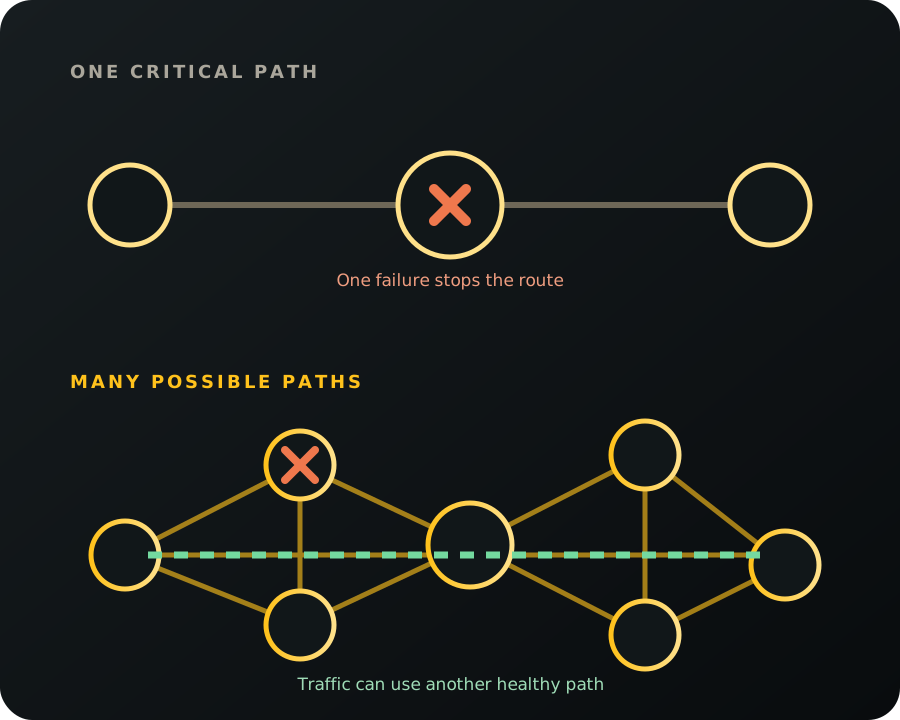
The internet grew as a network of networks: independently operated systems agreeing on shared rules so information could travel between them.
Connection without one permanent centre.
Packet-switching research showed that a message could be divided into packets, sent through available links and reassembled at its destination. ARPANET demonstrated packet networking between research sites. TCP/IP later provided shared rules for interconnecting different networks.
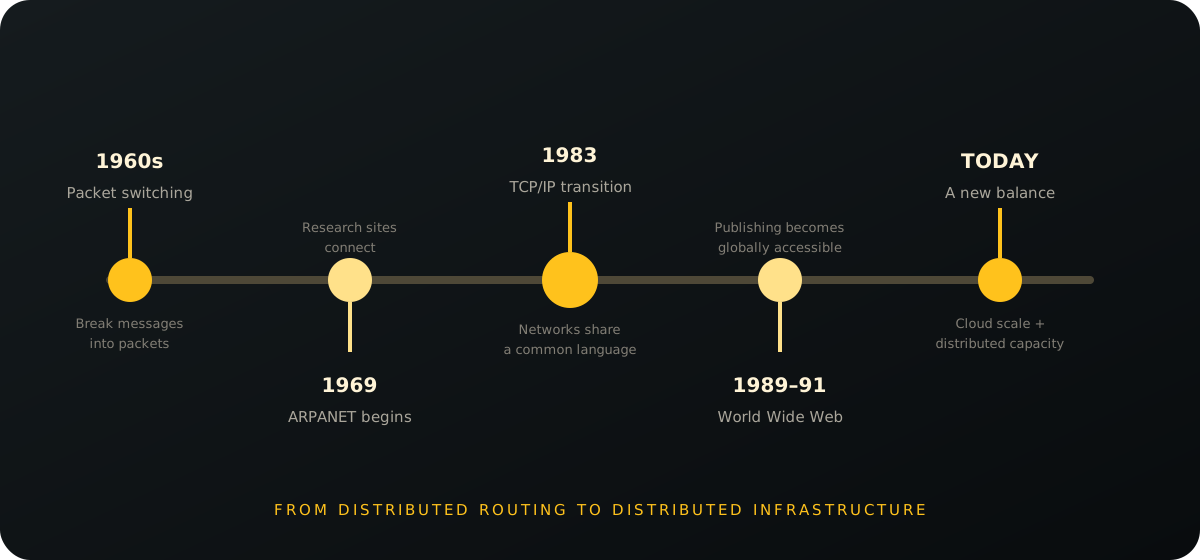
The internet was not created solely to survive nuclear war. Resilience influenced related research, while resource sharing, reliable communication and interconnecting different networks were also central goals.
Three principles made it powerful.
Packet switching
Information is divided into packets instead of reserving one permanent end-to-end circuit.
Multiple routes
Traffic can move around congestion or failure instead of depending on one path.
Open interoperability
Common protocols let independently operated networks communicate across different hardware and internal designs.
A network can distribute routing while still depending heavily on a small number of service providers and data centres.
The network stayed distributed. Services became concentrated.
Large providers made online services faster and easier to operate. Economies of scale moved enormous amounts of compute and storage into hyperscale facilities. That created powerful tools but also larger shared dependencies.
Apply distributed thinking beyond the network cable.
A decentralized data centre extends the logic to compute and storage. Workloads can be placed on eligible healthy nodes, protected data can use redundant locations and scheduling can react to capacity, location and trust.
| Internet principle | Infrastructure equivalent |
|---|---|
| Packets use available routes | Work moves to eligible healthy nodes |
| No one route is permanent | No one machine must be the only recovery point |
| Shared protocols connect networks | Standard node software coordinates different hardware |
| Routing reacts to conditions | Scheduling reacts to health, capacity, location and trust |
It must be resilient, secure, measurable and simple enough for businesses to trust.
A modern layer inspired by a proven idea.
BeeHive does not replace the internet. It uses the internet to coordinate verified distributed capacity for planned compute, AI, storage, hosting and secure file access.
Join the launch list ↗