How a decentralized data centre works.
Instead of relying on one giant building, it coordinates many independent machines as one secure, resilient pool of compute, storage and network capacity.

A traditional data centre concentrates servers, storage and networking in one controlled location. A decentralized data centre spreads those building blocks across verified operators and coordinates them as one platform.
Not one building. One coordinated network.
The control layer receives a request, checks identity and policy, then selects suitable nodes based on capability, health, location and trust. Eligible nodes perform the work while the platform monitors the result.
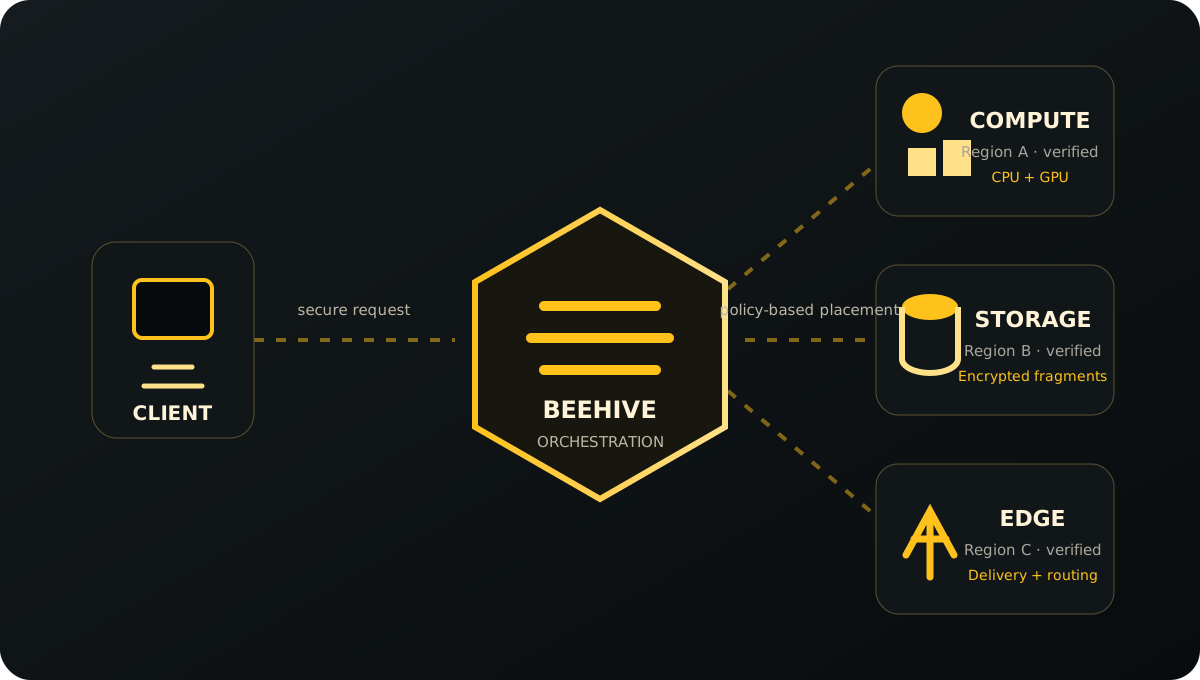
The network still needs identity, scheduling, policy, encryption, monitoring and accountability.
How work moves through the network.
The client sends a request
An application requests compute, storage, AI inference or content delivery.
The platform checks the rules
Identity, permissions, workload needs and regional policies are evaluated.
The scheduler selects eligible nodes
Only healthy nodes with suitable resources and sufficient trust can be selected.
Nodes perform isolated work
Nodes contribute capacity without broader access to the customer's environment.
The result is verified
Health signals, signed records and integrity checks help confirm completion.
How decentralized storage protects data.
Data can be encrypted and divided into protected pieces before placement. Redundant fragments are distributed to separate eligible nodes, allowing authorized recovery even if an individual node becomes unavailable.
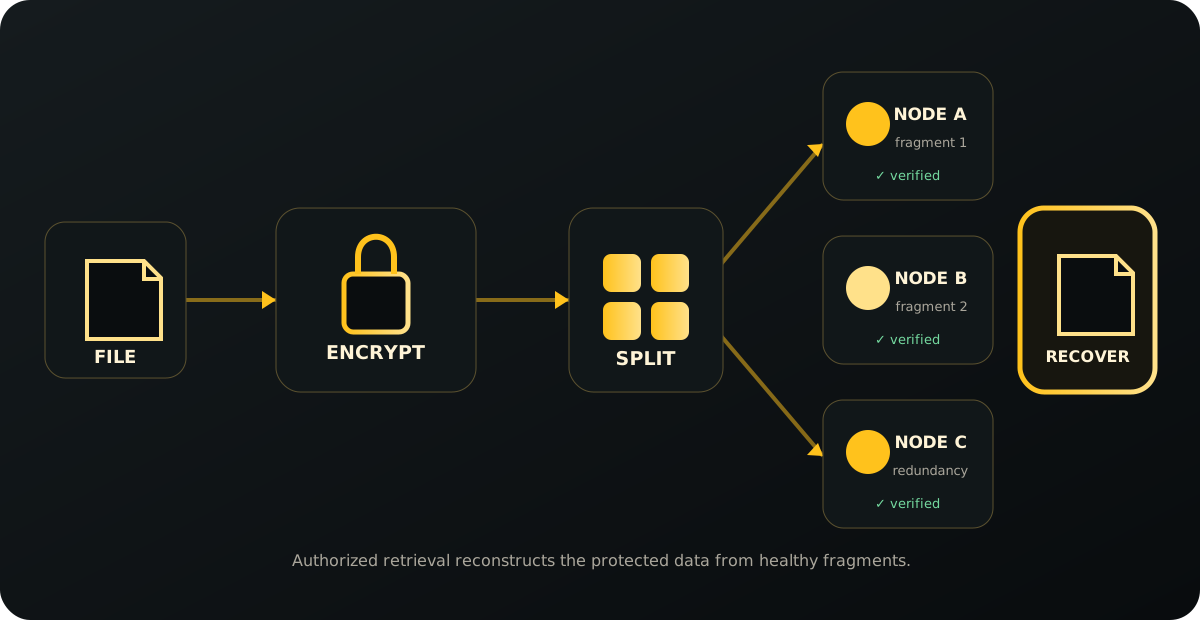
Implementations may use replication, erasure coding or a combination. The principle is to avoid making one storage location the only copy or recovery path.
Reliability comes from coordination.
Continuous health
Heartbeats show whether nodes are online and behaving as expected.
Redundant placement
Important data or work can span more than one failure zone.
Automatic reassignment
Failed eligible work can be retried or moved to healthy capacity.
Trust enforcement
Identity, isolation and quarantine help remove risky nodes from selection.
Decentralization is not automatically faster, cheaper or safer. Results depend on routing, network quality, node standards, redundancy and orchestration.
Centralized and decentralized, side by side.
| Question | Traditional data centre | Decentralized data centre |
|---|---|---|
| Where are resources? | Concentrated in selected facilities | Distributed across eligible operator locations |
| How does capacity grow? | Facility expansion and new hardware | Verified nodes add capacity to the pool |
| How are failures handled? | Redundancy inside facilities | Redundancy and reassignment across nodes |
| Key challenge | Cost and geographic concentration | Consistent trust, performance and orchestration |
A clearer way to use distributed infrastructure.
BeeHive is being developed to bring compute, AI, storage, hosting and secure file access into one coordinated platform. Services and pricing are coming soon.
Join the launch list ↗